

Von Miller rewarded bettors by taking home Super Bowl 50 MVP honors at odds as high as 25-1 in Las Vegas sportsbooks last season. Bettors this year are hoping for a similar outcome from a different defensive player.
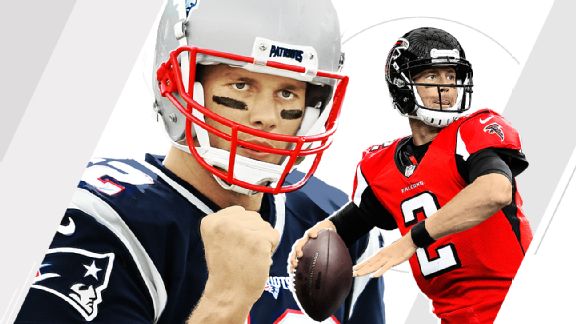
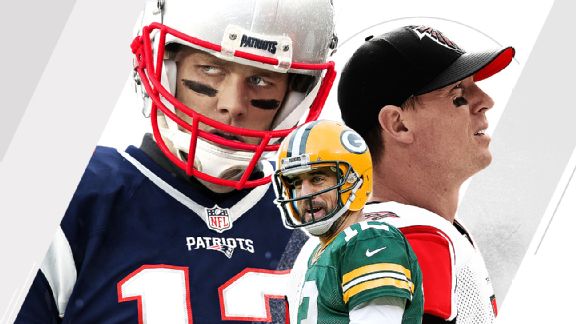
Tom Brady is the overwhelming favorite to win MVP at 10-11 odds at the Westgate Las Vegas SuperBook, with Matt Ryan the second choice at 8-5.
The odds of Falcons linebacker Vic Beasley Jr. winning Super Bowl MVP opened at 100-1 at Westgate and are now down to 50-1. Wesley Hitt/Getty Images
A spokesperson from William Hill US told Chalk in an email that one bettor has a $6,000 wager at 50-1 (which would net $300,000) on Beasley.
Several other long shots are drawing big money at William Hill, including $3,000 wagers on Levine Toilolo and Austin Hooper at 100-1, $1,000 on Brian Poole and Robert Alford at 300-1 and even a $1,000 bet on Falcons fullback Patrick DiMarco at 300-1.
The largest bets at Westgate have been a “few hundred dollars,” according to head oddsmaker Jay Kornegay, on New England Patriots running back LeGarrette Blount at 12-1. The most money at Westgate has been on Blount, followed by Brady and Dion Lewis at 25-1.
Last year, in Super Bowl 50, Cam Newton was the 5-7 favorite to win MVP at Westgate, followed by Peyton Manning at 7-2.
Borussia Dortmund’s sporting director wasn’t willing to acknowledge speculation over a potential move involving Marco Reus after reports linked Arsenal with the Germany international.
Although rumours involving Reus are nothing new, recent reports out of England suggest Arsenal has identified the 27-year-old as a possible replacement should Alexis Sanchez decide against signing a new contract and potentially depart the club.
German outlet Bild added fuel to the fire by reporting Arsenal is willing to launch a €60-million bid to land Reus.
However, Dortmund sporting director Michael Zorc wasn’t willing to address the unsubstantiated reports.
“I won’t waste my time with half-baked stuff, Zorc told Bild, according to Stephan Uersfeld of ESPNFC. “It’s not known to me that Marco wants to leave us.”
When he’s not injured, rumours involving Reus’ departure have become somewhat of a transfer-window tradition. Yet, while he’s watched plenty of teammates leave Dortmund, Reus has never come close to leaving the club he first joined as a seven-year-old.
Reus may be forced to watch another one of his teammates depart following Pierre-Emerick Aubameyang’s recent admission that he’s considering a move away from the club in order to “take the next step” in his blossoming career.
Meanwhile, uncertainty over Sanchez’s future at the Emirates Stadium stems from the club’s failure, thus far, to sign the Chile international to a new contract as his current deal edges toward its final 12 months before expiring in June 2018.
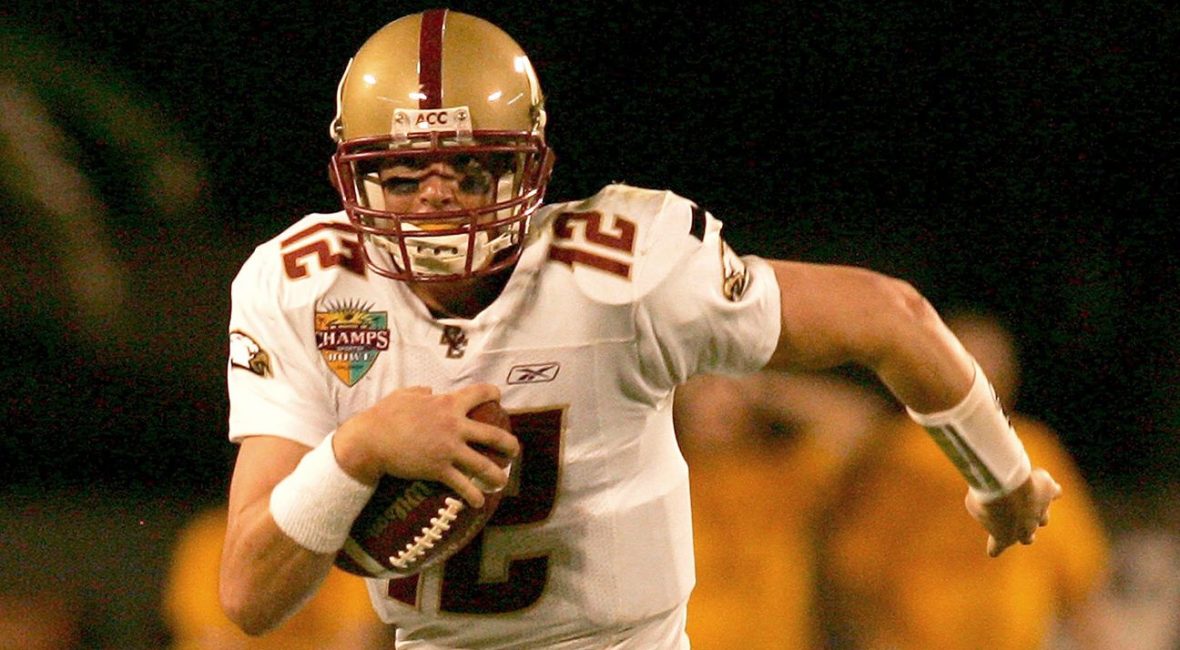
HOUSTON — A Boston College press release from Feb. 5, 2003, touted the top recruits in the Eagles’ 23-member football recruiting class.
Matt Ryan wasn’t mentioned.
A total of 14 players, including current Tampa Bay Buccaneers offensive lineman Gosder Cherilus and current New Jersey-area coach/substitute teacher/trainer Andre Callender, were singled out in the release as key members of a class that ranked as high as 10th nationally. The only quarterback referenced was Paul Peterson, a transfer from Snow Junior College in Utah.
And then there was Ryan, a three-star recruit from Penn Charter in Philadelphia.
“I was a 170-pound, triple-option quarterback,” Ryan said. “So, yeah, I remember being like a three-star guy.”
The Atlanta Falcons quarterback is on the verge of being named the NFL’s MVP as he guides his team into a Super Bowl LI matchup Sunday against Tom Brady and the New England Patriots. Ryan wasn’t the most highly touted recruit, but his rise to a top-caliber NFL talent should be a message to all the players signing national letters of intent Wednesday.
Ryan was recruited by Iowa, Georgia Tech, Connecticut and Purdue before picking Boston College.
“I remember signing,” Ryan said. “It was at my high school. We had a number of different athletes at our school who were signing to go to different places. And it was a fun event. I chose BC because it was an awesome place. It’s a great school. It’s a great place to play football. The city is one of the best to go to college in. There’s so many schools, so many different places you can go hang out. It’s was an awesome place, and I’m glad I made that decision.”
Matt Ryan was a three-star quarterback at Penn Charter in Philadelphia before heading to Boston College. Courtesy of The William Penn Charter School
According to Rivals.com, Kyle Wright was the top pro-style quarterback in the 2003 class, followed by Chris Leak and Tommy Grady. Ryan was ranked No. 25 on a list that also included JaMarcus Russell (No. 5), Brady Quinn (No. 10), Matt Flynn (No. 16), and Super Bowl champ Joe Flacco (No. 39).
“Some different guys, some guys who went to other places,” Ryan said. “It’s not a perfect process, high school recruiting. People develop at different times. Joe [Flacco], obviously, started off at Pittsburgh and ended up at Delaware. He found his stretch and has had a great career. And I feel like I’ve done a good job as well.”
Longtime recruiting analyst Tom Lemming recalled visiting Ryan in Philadelphia as part of his yearly national tour to highlight the nation’s best players. Lemming said he was high on Ryan throughout the entire process.
“I interviewed him and gave him a really good buildup, but he wasn’t a super-national guy,” Lemming said. “That’s why BC got him. If I go see a kid, I’ve got to like him, or else I wouldn’t have spent the time to go see him.
“He was a passer. He didn’t have great feet, but he was taller with a really good arm. Back then, pro-style guys were in much more demand. Nowadays, you’ve got to run a spread offense for college. But back then, him being a pro-style guy, it didn’t really matter that he wasn’t a great runner. He was a very productive player his last two years of high school.”
Although Lemming was high on Ryan, he never imagined him developing into the player he is today.
Covered Bears for seven seasons at Chicago Tribune
Also worked at Chicago Sun-Times, Fresno Bee
Honorable mention, Football Writers Association of America for enterprise writing, 2002
Mike Reiss
Close
ESPN Staff Writer
Covered Patriots since 1997
Joined ESPN in 2009
HOUSTON — From the personnel to the style of play, the Atlanta Falcons and New England Patriots couldn’t be any more different on defense. The Falcons are one of the fastest defenses in the NFL and have an it’s-all-about-the-ball mentality to create turnovers, while the Patriots boast one of the biggest and most physical units.
Atlanta is more likely to penetrate at the snap and create disruption; the Patriots often ask their defensive linemen to play a two-gapping technique by controlling the blocker in front of them while remaining patient. New England led the NFL in scoring defense during the regular season (an average of 15.6 points per game allowed), while Atlanta ranked 27th in points allowed (25.3). One thing that helped the Falcons’ defense was the fact the unit was often playing with the lead, a result of the team outscoring opponents 139-68 in the first quarter.
CALLING CARD
Falcons: Speed and physicality. When Dan Quinn left his defensive coordinator job in Seattle to become the head coach of the Falcons, his signature phrase was “fast and physical.” It took a bit, but Quinn eventually established such an identity within his defense. It started with NFL sacks leader Vic Beasley Jr., who used his devastating speed off the edge to record 15.5 sacks to go along with six forced fumbles. Then rookie middle linebacker Deion Jones, one of the fastest linebackers the Falcons have had in years, put his stamp on the defense with a 90-yard interception return for a touchdown against his hometown team, the New Orleans Saints, in his first game inside the Superdome. Atlanta won that game 45-32. Jones finished the season with a team-high 106 tackles, and fellow rookie Keanu Neal, the enforcer at safety with his punishing hits, finished right behind with 105 stops. Free safety Ricardo Allen showed the range and open-field tackling to help eliminate big plays, and the cornerback tandem of Robert Alford and Jalen Collins made up for the loss of speedy Pro Bowl CB Desmond Trufant (pectoral surgery).
The Falcons’ Vic Beasley led the NFL with 15.5 sacks this season. AP/Brad Penner
Patriots: Tackling. The Patriots’ defense led the NFL in fewest yards allowed after the catch (4.05 average), which reflects their solid tackling. While some teams teach a style of holding up the ball carrier so others can rally to the ball and attempt to strip it, coordinator Matt Patricia focuses more on defenders tackling ball carriers to the ground. It shows at every position, including cornerback, which is often overlooked in the run-force game. Sound tackling has also contributed to one of New England’s more impressive statistics: Its defense hasn’t allowed a 90-yard rusher in the past 25 games, dating to 2015. Meanwhile, creating turnovers has long been a staple of the Patriots’ defensive unit; after totaling just nine through the first nine games (two of which came on special teams), the group exploded for 14 over the final seven regular-season games of 2016.
Patriots: Denver has traditionally been a challenging place for the Patriots to play (10-21 all time), but the defense did its part in a 16-3 win Dec. 18. Sure, it was against quarterback Trevor Siemian and an offense that doesn’t qualify as lethal, but on a day when the Patriots’ own offense was struggling to find its groove, the defense put the clamps down in holding the Broncos to a 2-of-12 success rate on third down while recovering one fumble and intercepting a pass. In a dominant stretch to open the second half, the defense produced five straight three-and-out drives.
THE ONE TO WATCH
Falcons: Beasley. He doesn’t have a sack or a quarterback hit yet this postseason, so he’s due. Of course, opposing teams are chipping him more often, knowing how dominant a pass-rusher he can be. Now it’s up to Beasley to keep his focus and play with the same intensity he has all season. His likely matchup in the Super Bowl will come against Patriots right tackle Marcus Cannon. The Patriots have lost two of the three Super Bowls in which quarterback Tom Brady was sacked multiple times. Beasley had four multisack games in the regular season.
Malcolm Butler is up for the challenge of facing Julio Jones in the Super Bowl. Photo by Jim Rogash/Getty Images
Falcons: The Falcons established a first in starting four rookies on defense in the NFC Championship Game with Jones, Neal, linebacker De’Vondre Campbell and nickelback Brian Poole. If the lineup remains the same Feb. 5, it will mark the first time that has occurred in a Super Bowl. All four have been key to the team’s resurgence, with Neal (first round), Jones (second) and Campbell (fourth) being draft picks and Poole an undrafted player. The Falcons also start three second-year players on defense in Beasley, Collins and nose tackle Grady Jarrett.
Patriots: Second-year defensive end Trey Flowers, who led the Patriots with seven sacks during the regular season, has had notable success as a pass-rusher when moving inside in obvious passing situations. His quickness and long arms have given interior offensive linemen some issues. Flowers played in only one game in his rookie season in 2015. He was buried on the depth chart and didn’t provide enough special-teams value to crack the 46-man game-day roster. Bill Belichick said one of the key decisions that set Flowers up for success in 2016 was placing him on injured reserve in the final month of the 2015 season (shoulder) so he could get a head start on his rehab. Flowers, who played at Arkansas, was acquired with the 2015 fourth-round draft pick the Patriots received from Tampa Bay in exchange for guard Logan Mankins.