KANSAS CITY, Mo. — Safety Eric Berry played the 2016 season for the Chiefs as their franchise player, but once apparently is enough.
Berry told NFL Network he wouldn’t play for the Chiefs under the franchise tag again in 2017.
“I’m definitely not going to play under the franchise tag this year,” Berry said. “I want to end my career in Kansas City. I want to play there. I love the city, I love the vibe. I love my teammates. I really look at them more than teammates. We’ve been through a lot, and they supported me a lot.
“But I don’t feel comfortable playing under the franchise tag this year.”
The Chiefs designated Berry as their franchise player last year after the sides couldn’t agree on a long-term contract. Berry skipped the offseason practices and the early portion of training camp but eventually signed the Chiefs’ mandatory one-year contract worth about $10.8 million.
Berry, 28, had perhaps his best NFL season. He returned an interception for a touchdown to spark a fourth-quarter rally to beat the Carolina Panthers in November and returned one for a touchdown and another for two points to lead to a win over the Atlanta Falcons in December.
Berry, speaking before an NFL Play 60 event in the Kansas City area last week, told ESPN he wanted to remain with Kansas City and that the Chiefs had been in contact with his agent only the day before.
HOUSTON — There are times when Richard Smith’s coaching “style” can feel like 99 parts “tough” and one part “love,” but the Atlanta Falcons defensive coordinator saw a need this past offseason and a remedy.
Smith believed the Falcons needed more sacks, more impact plays, more everything from defensive end Vic Beasley Jr., so Smith asked one of the better pass-rushers he’s ever coached – Denver Broncos linebacker Von Miller – for an assist.
“I’ve watched [Beasley] before, in college, then in Atlanta, I knew all about him,” Miller said. “But Coach Smith kind of put us together in the offseason when I was talking to him. And I’ve been calling, texting [Beasley] since. He’s one of my guys now. I feel like I have a great relationship. But when Coach Smith wants something, you know, I’ll do that.”
Toss Smith’s name at Miller and you will almost certainly get a smile, followed by Miller shaking his head with a “ah, Coach Smith …”
Smith was Miller’s first position coach in the NFL after the Broncos made Miller the No. 2 pick of the 2011 draft. Smith, who uses plenty of what Miller has called “get-your-attention language,” had the task of taking an immensely gifted player and turning him into a well-rounded pro.
It was much the same task Smith and the rest of the Falcons’ defensive coaches faced with Beasley, who was the eighth pick of the 2015 draft. Beasley’s rookie year often played out at the intersection of potential and transition, given he finished the year with flashes of what he could do to go with just four sacks.
“People were all over him last year, saying ‘he’s a bust, he’s a bust,”’ Smith said. “He said at the end of the year he was tired of answering all these questions, and I said, ‘Well, let’s do something about it.”’
In his second season, Vic Beasley Jr. had 15 1/2 sacks and six forced fumbles for the NFC champion Falcons. Photo by Josh Lefkowitz/Getty Images
So, they got to work, Beasley said. They worked to get Beasley stronger, worked to know more about what blockers wanted to do in each situation and they worked to find the player Smith said “you know is in there.” And the almost weekly conversations with Miller were also part of the improvement.
“He’s like my brother,” Miller said. “You see what he can do. I feel like if he wants to bounce things off me, we just talk. But the sky’s the limit for him; he’s still got more to show.”
“I saw a lot of similarities in our games when I was coming into the draft,” Beasley said. “And I think almost every week we would talk, and I think this offseason we might get together to work out.”
The arrival of Dwight Freeney to the Falcons has had an impact on Beasley as well, given Freeney’s knowledge of how offenses attack impact pass-rushers and his ability to explain what pass-rushers can do in those situations.
To rise to those kinds of moments, Beasley knows he’ll have to find a way to deal with attention from the Patriots on Sunday. He led the team by an 11-sack margin – Adrian Clayborn, who finished the season on injured reserve, was second on the team with 4.5 – and understands what’s headed his way.
“I look forward to the matchups,” Beasley said. “I worked extremely hard in the offseason. Coaches spent a lot of time with me, and Dwight brought a lot to the team. … He’s a great leader and I think he had lot do with a lot our success this year. … I’m just going into it with a relentless approach. … It’s the kind of situation you always want to play in; it’s for a championship.”
CHARLOTTE, N.C. — Carolina Panthers coach Ron Rivera said Thursday during an appearance on ESPN’s NFL Insiders that the organization probably will have to use the franchise tag on Pro Bowl defensive tackle Kawann Short.
Short is an unrestricted free agent after the Panthers couldn’t reach a long-term deal with him prior to the 2016 season.
Rivera said general manager Dave Gettleman already has had salary-cap meetings, and the best way to guarantee Short remains on the roster is with the tag.
“Obviously, we’ll probably have to tag him,” Rivera said. “But if we do, so be it. If not, I think they can get a deal done and I’m pretty optimistic about that because KK is a big part of what we do.
DT Kawann Short said after Carolina’s season finale that he would be all right with the franchise tag, though it is not his first choice. He also reiterated, “I want to be a Carolina Panther.” Phelan M. Ebenhack/AP Photo
“Again, we believe up front is the most important part of your team. You’ve got to be able to stop the run, rush the passer, and I think KK is one of those guys who has that kind of ability.”
The estimated tag for a defensive tackle in 2017 is $13.5 million. Short, who led Carolina with 11 sacks in 2015, was believed to have been seeking a deal similar to the $17.1 million per year the Philadelphia Eagles gave Fletcher Cox last year.
Short, Carolina’s second-round pick in 2013, fell to six sacks this past season when the Panthers went 6-10.
Short said after the season finale that he would be all right with the franchise tag, although that is not his first choice.
“Everybody would like to avoid that,” he said. “If it happens, it happens. If it happens, I’m still going to be professional about the situation.”
Short said he doesn’t plan to follow in the footsteps of former Carolina cornerback Josh Norman, who didn’t sign the tag when Gettleman used it last season and didn’t participate in the start of offseason workouts.
Gettleman then rescinded the tag, and Norman signed with the Washington Redskins.
“Me and Josh are two different people,” Short said the day players cleaned out their lockers. “We walk two totally different sides of the street, at two totally different places, in two totally different directions.
“Me and Josh are not the same.”
Short reminded that Norman “could have stayed here if he wanted.”
He also reminded, when asked if he wanted to test free agency, that he wants to remain in Carolina.
“I want to be a Carolina Panther,” he said. “That’s it.”
Covered Vikings for Minneapolis Star Tribune, 1999-2008
Super Bowl LI has been dissected from nearly every angle. In the final days before the game, let us add one more: the role of officiating in determining the eventual champion.
Perhaps the least-discussed aspect of this matchup is the extent to which referee Carl Cheffers and his crew will allow defensive players on both sides to be physical with opposing receivers. It’s an especially pertinent topic given the New England Patriots’ long history of overcoming elite-level offenses in the playoffs, at times using a strategy that was so physical that it prompted the NFL to redouble its efforts to enforce defensive holding and illegal contact penalties in the mid-2000s.
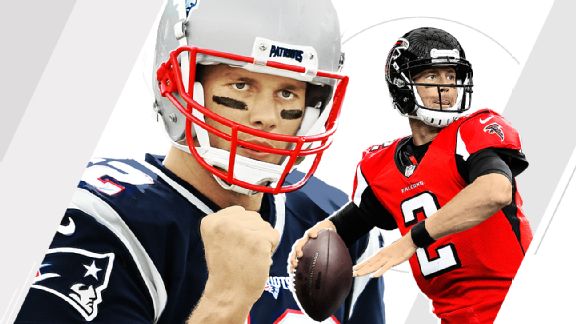
It stands to reason that the Patriots will have more success against Atlanta Falcons quarterback Matt Ryan and receiver Julio Jones if their cornerbacks can push the limits of what’s allowable under NFL rules. Will Cheffers and his crew permit it? Let’s make that issue the focus of our final officiating preview of the 2016 season.
As we’ve noted often, penalty frequency can vary dramatically among NFL officiating crews, similar to a strike zone that changes in baseball depending on who the home plate umpire is.
Tracking this tendency, as both the Patriots and Falcons surely have done, is complicated because Cheffers won’t have his usual regular-season crew.
The NFL assigns postseason games to its top-graded officials, regardless of crew assignment. In this case, Cheffers will have only one member of his 2016 crew with him: head linesman Kent Payne. Cheffers himself has little impact on penalty calls in the defensive backfield from his position behind the quarterback, other than setting the tone for the entire crew before the game.
So in this situation, we’ll utilize regular-season data for the crews of each official who will play a role in making such calls.
We’ll refer to “defensive coverage” penalties: the combined total of calls for defensive pass interference, illegal contact and defensive holding. As you’ll see below, most of the officials who’ll have the primary responsibility for those calls in Super Bowl LI — as spelled out on the NFL’s football operations site — hail from crews that call fewer such penalties on average.
Here’s one statistic to keep in mind from the top: Overall, penalties have dropped 29.7 percent in the 2016 playoffs compared to the regular season, from 15.8 per game (including declined/offsetting) to 11.1. Within that drop, however, calls for pass interference, illegal contact and defensive holding have remained steady: about 1.2 per game. It’s quite possible, of course, that the flag total has remained constant even as the level of physicality has increased, which leads to a net result of fewer uncalled fouls.
Carl Cheffers, who has been an NFL official since 2000, will be calling his first Super Bowl as a referee this weekend. James Kenney/AP Photo
2016 analysis: Spent the season on referee Pete Morelli’s crew, which called a total of 30 defensive coverage penalties, fourth fewest in the NFL.
Side judge Dyrol Prioleau
2016 analysis: Spent the season on referee Jeff Triplette’s crew, which called a total of 34 defensive coverage penalties, tied for seventh fewest in the NFL.
Back judge Todd Prukop
2016 analysis: Spent the season on referee Tony Corrente’s crew, which called a total of 34 defensive coverage penalties, tied for seventh fewest in the NFL.
There are 17 officiating crews in the NFL, and it’s worth noting the range of defensive coverage penalties between them. Referee Jerome Boger’s crew called 59, while Craig Wrolstad’s called 22. Three of the four crews represented in this analysis called fewer than the median total.
This isn’t all based on the officials’ tendencies, of course. The teams themselves, their strategies, and the skill with which their defenders use their hands play a role, too. During the regular season, the Patriots were called for 18 defensive coverage penalties, tied for the eighth fewest in the league. The Falcons were called for 19.
When two opponents have been penalized less than the median, and the majority of officials hail from conservative crews, there is reason to believe that defensive backs will be allowed a fair degree of physicality in Super Bowl LI. That would seem to favor the Patriots, especially in their efforts to slow down Ryan and Jones. But in the end, that’s why they play the game.